Services
C4 Light designs architectural lighting environments and integrated control systems for luxury residences. We work from early schematic design through final aiming and programming, in close collaboration with your architect, interior designer, and builder, so every layer of light and shade is purposeful and coordinated.
Lighting Design
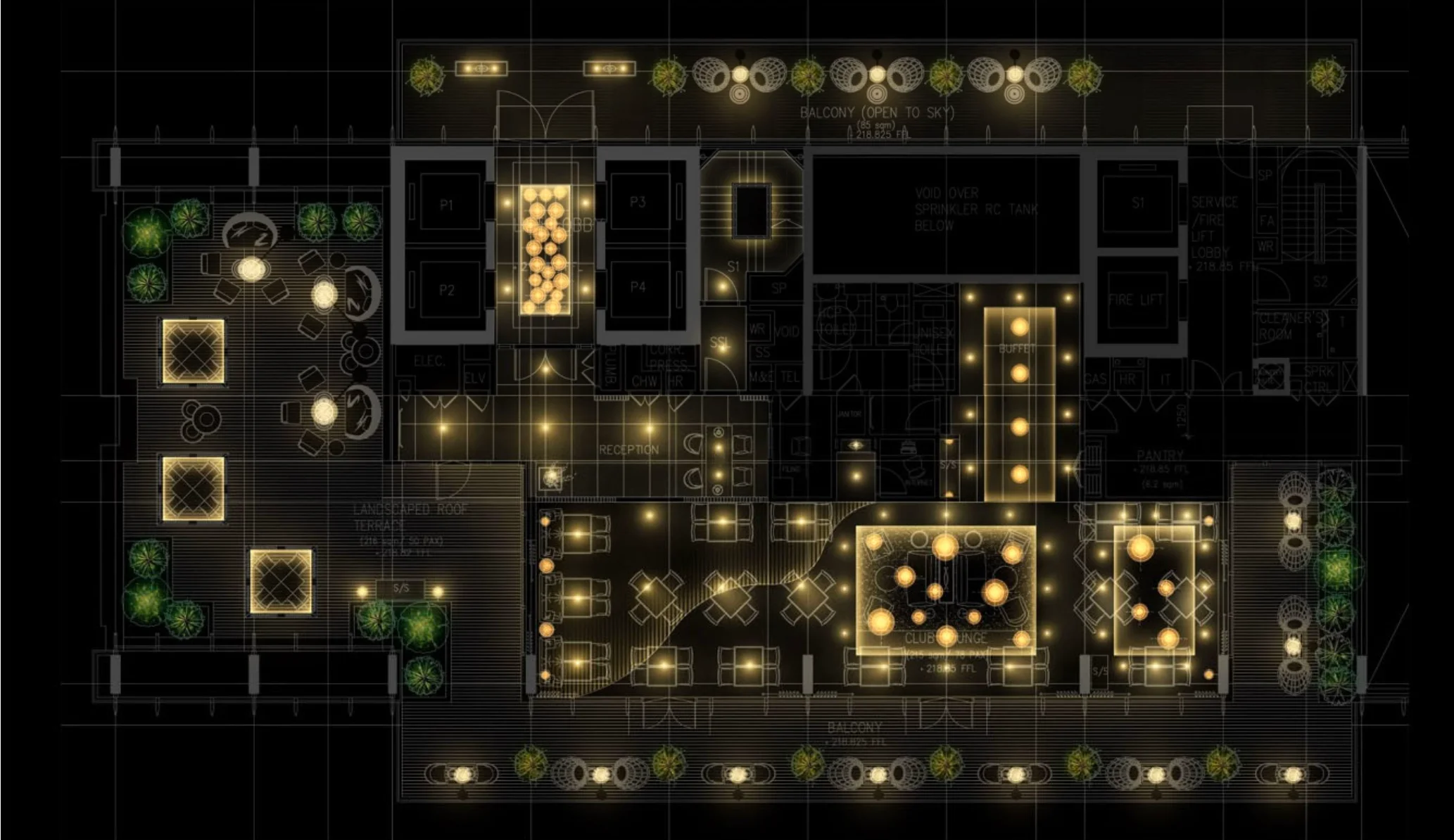
With 25 years of residential practice, our design work shapes how a home is experienced — from the first sketches through the final fixture aiming. We balance the technical (lumen levels, beam angles, color temperature, dimming behavior) with the experiential (mood, ritual, sightline, transition). The result is a lighting plan that supports the architecture rather than competing with it.
Our deliverables include:
- Whole-home assessment and design intent
- Lighting layout drawings and lumen calculations
- Control zone and keypad layouts
- Fixture specification compatible with the control system
- CAD coordination with the broader design team
- Final aiming, scene tuning, and walkthrough
Lighting Fixtures
We curate a tightly edited fixture palette for luxury residential work — including DMF, Lucetta, Luminii, WAC, and Visual Comfort — and produce a complete fixture schedule once the lighting design is approved.
Our DMF relationship is a protected specification channel: a curated, non-commoditized recessed and architectural fixture program that is not available through general distribution. For our clients, that means a quieter, more architectural lighting palette than the products that show up on Amazon or in big-box channels.
Fixture categories include:
- Recessed architectural lighting
- Pendants and chandeliers for kitchens, dining, and stairs
- Wall sconces, interior and exterior
- Linear lighting for cove, under-cabinet, and millwork detail
- Pool, fountain, and water-feature lighting
Lighting Control
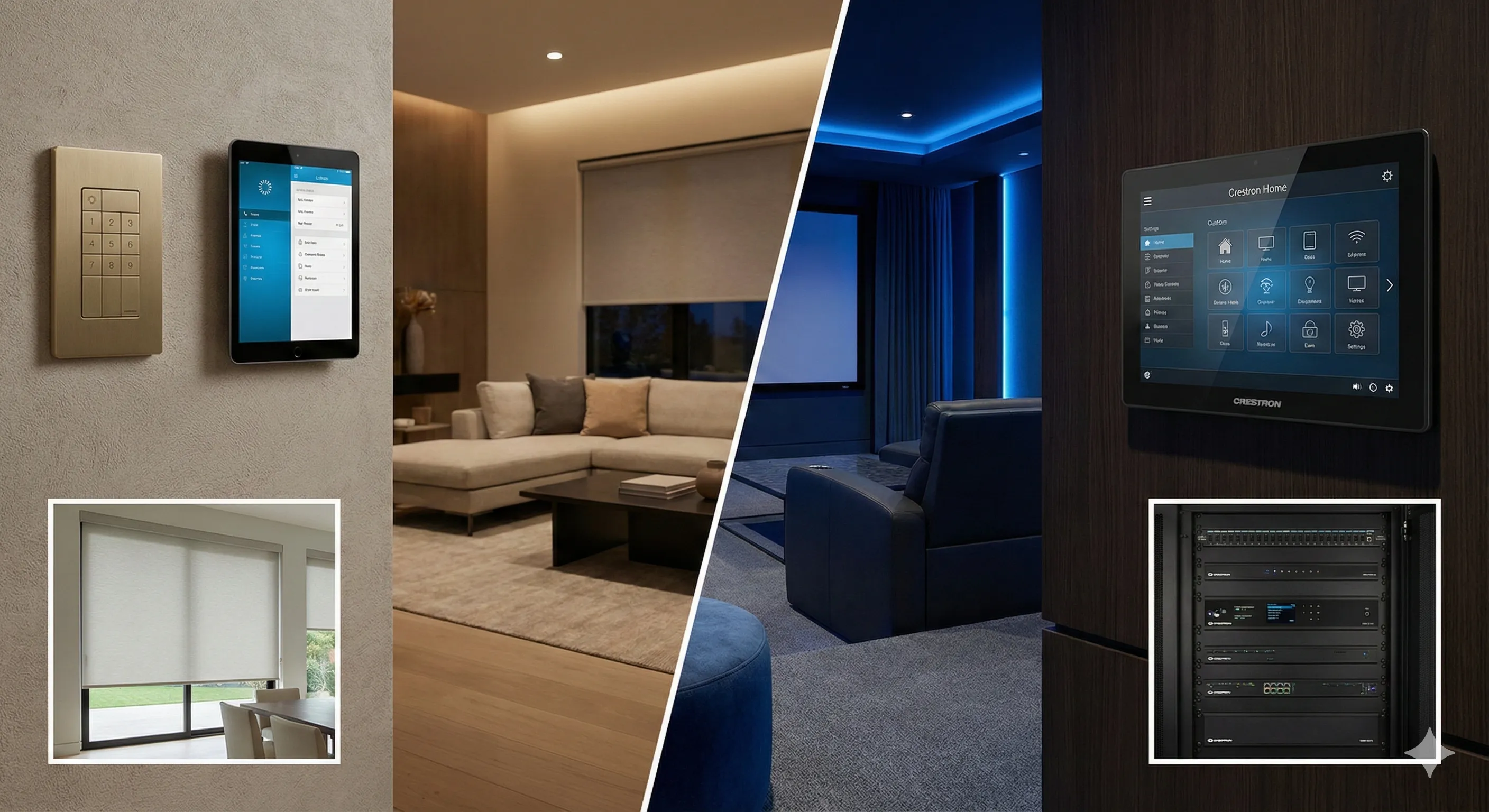
We are authorized Lutron and Crestron designers, specifying RadioRA 3, HomeWorks, and Crestron Home systems sized to the project — from a single residence to a large estate. Control design covers processors, dimming and switching panels, keypad stations, engraving, and programming for daily-use scenes that feel inevitable rather than complicated.
Centralized control replaces banks of switches with a small number of beautifully engraved keypads, letting an entire room or floor be set with a single button. The system runs to a schedule, responds to presence, and provides app-based access when needed — but the goal is a home that does the right thing without being asked.
Motorized Shades & Curtains
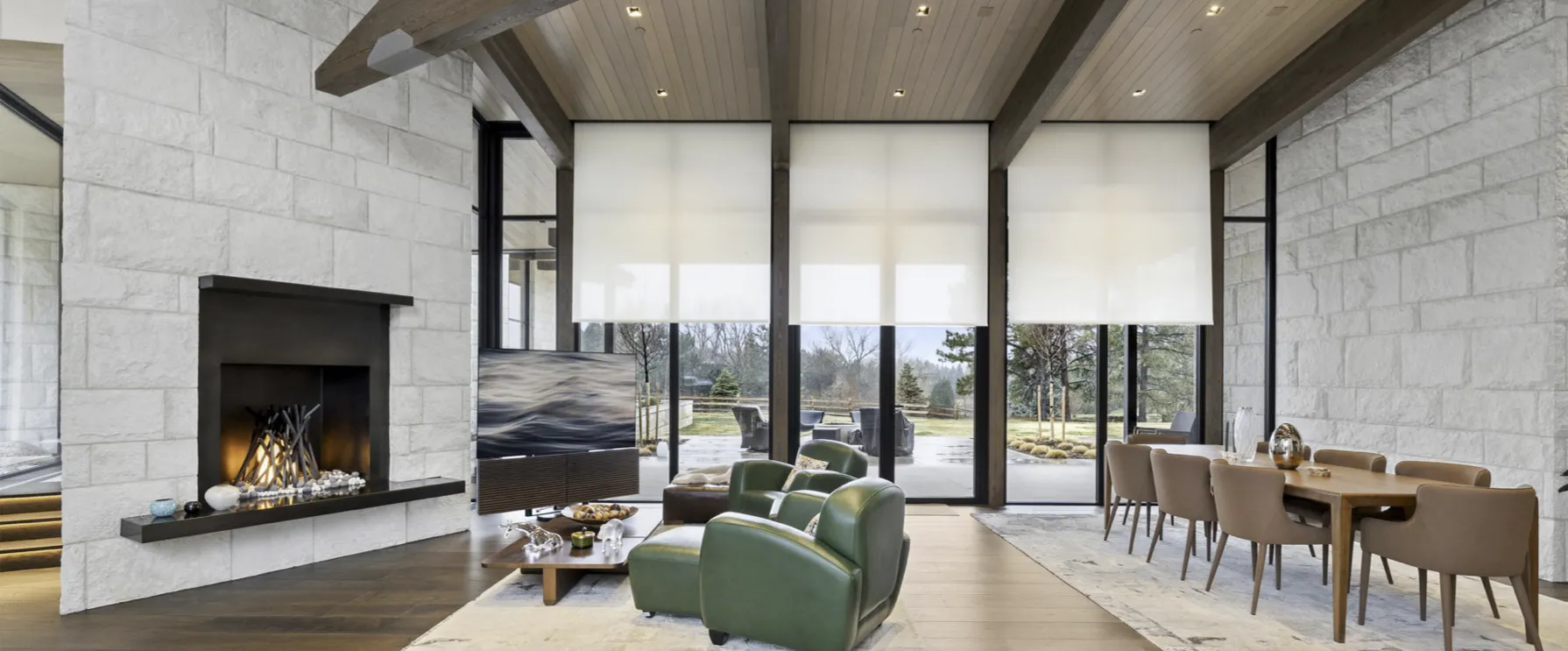
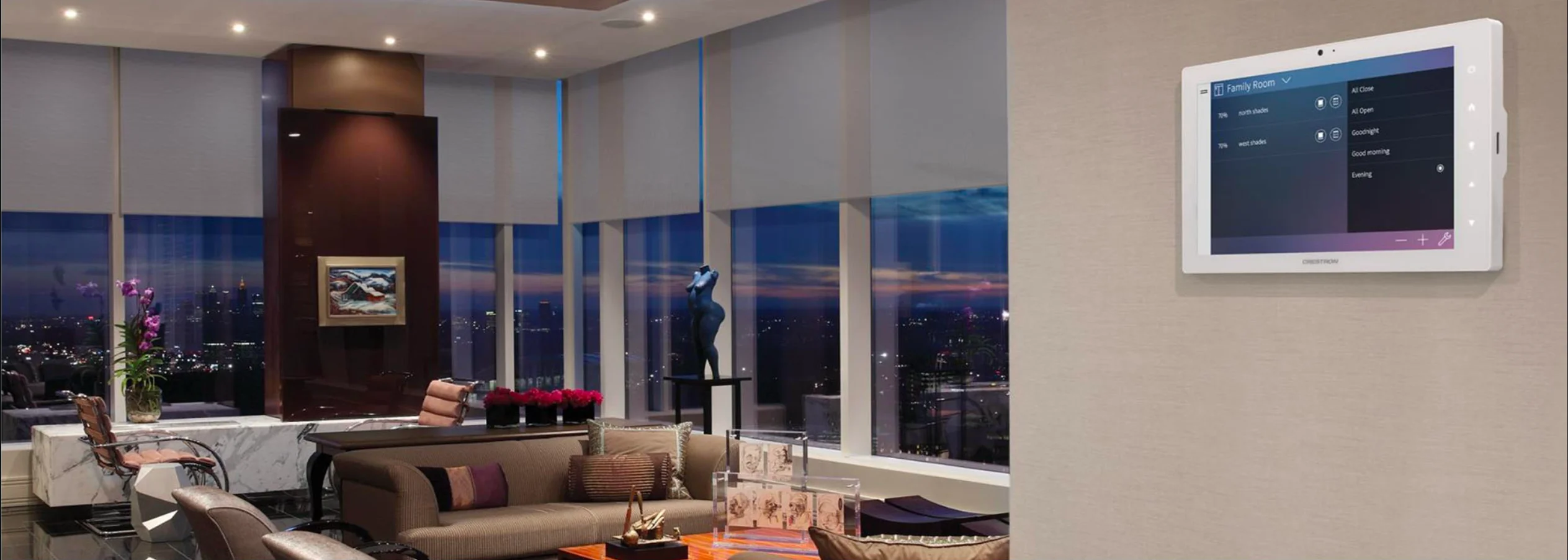
Motorized shades and drapery are designed alongside the lighting so daylight, glare, and privacy are managed as part of the same composition. We specify systems from Crestron, Lutron, and Screen Innovations: roller shades, Roman shades, skylight shades, sheer-and-blackout dual-track configurations, drapery tracks, and outdoor-rated solar and insect screens.
- Coordinated fabric and trim selection with the interior designer
- Integration with the lighting control system for unified scenes
- Schedule-driven and astronomical-clock automation
- Clean pocket details coordinated with the architect and builder
Landscape Lighting
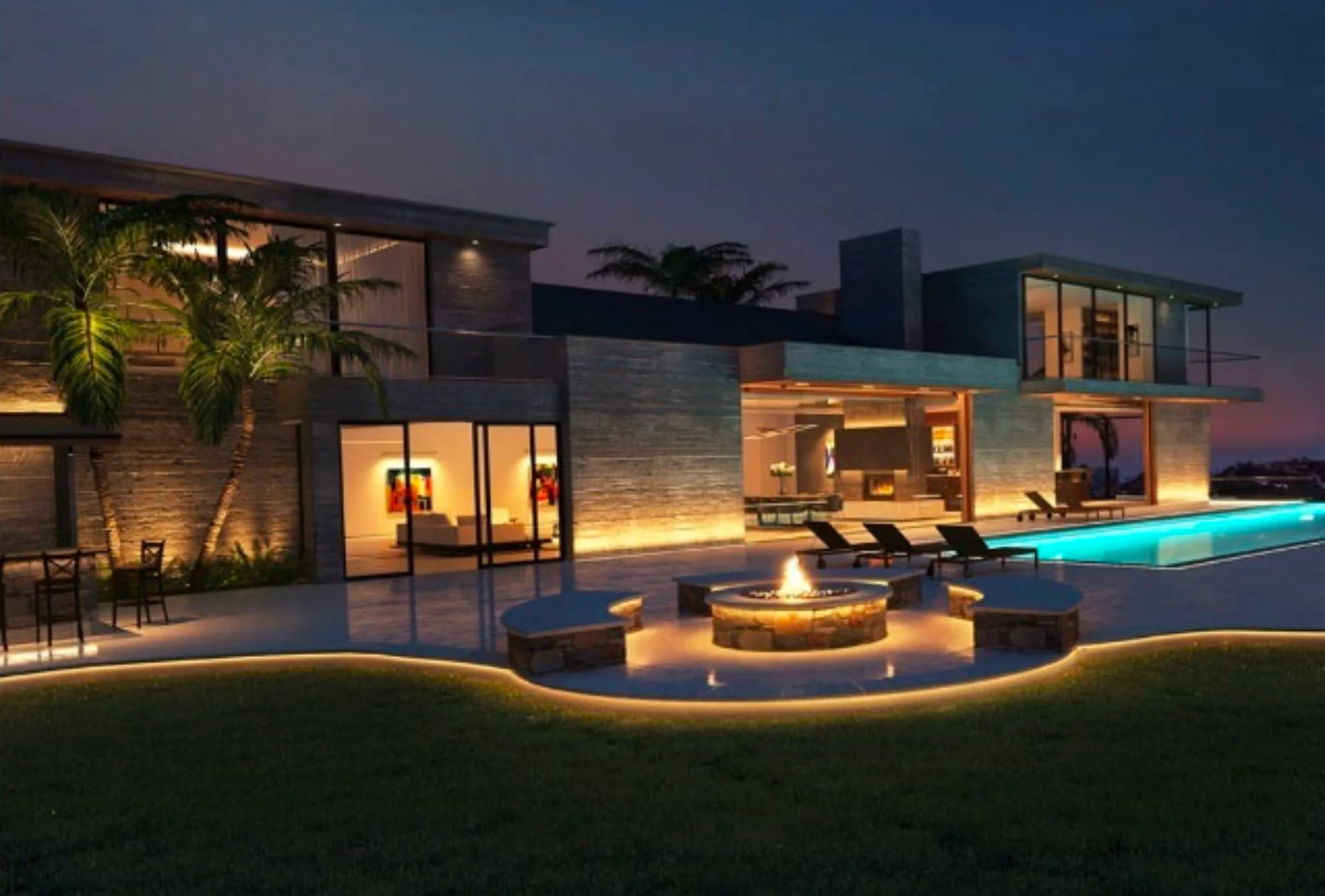
Outdoor lighting extends the architectural composition into the garden and the long view. As certified designers and resellers for Garden Light LED, Coastal Source, and FX Luminaire, we design landscape lighting that is integrated with — not bolted on to — the interior system.
- CNC-machined aluminum and raw-brass fixtures
- IP66-rated for full weather exposure
- Cree binned LEDs for color consistency across runs
- 20-year fixture warranties, lifetime on transformers
- Unified scenes between interior, façade, and landscape
How We Engage
Most engagements begin during schematic or design-development phases, when integration with the architecture costs nothing to change. We also advise on renovations and on existing homes where the constraints are tighter.
Design fees are credited toward the fixture and control package on full-scope engagements — so the design investment funds itself when you build the system we specify. This keeps us aligned with the design intent rather than with vendor incentives, and it makes the early commitment a value exchange rather than an overhead.