
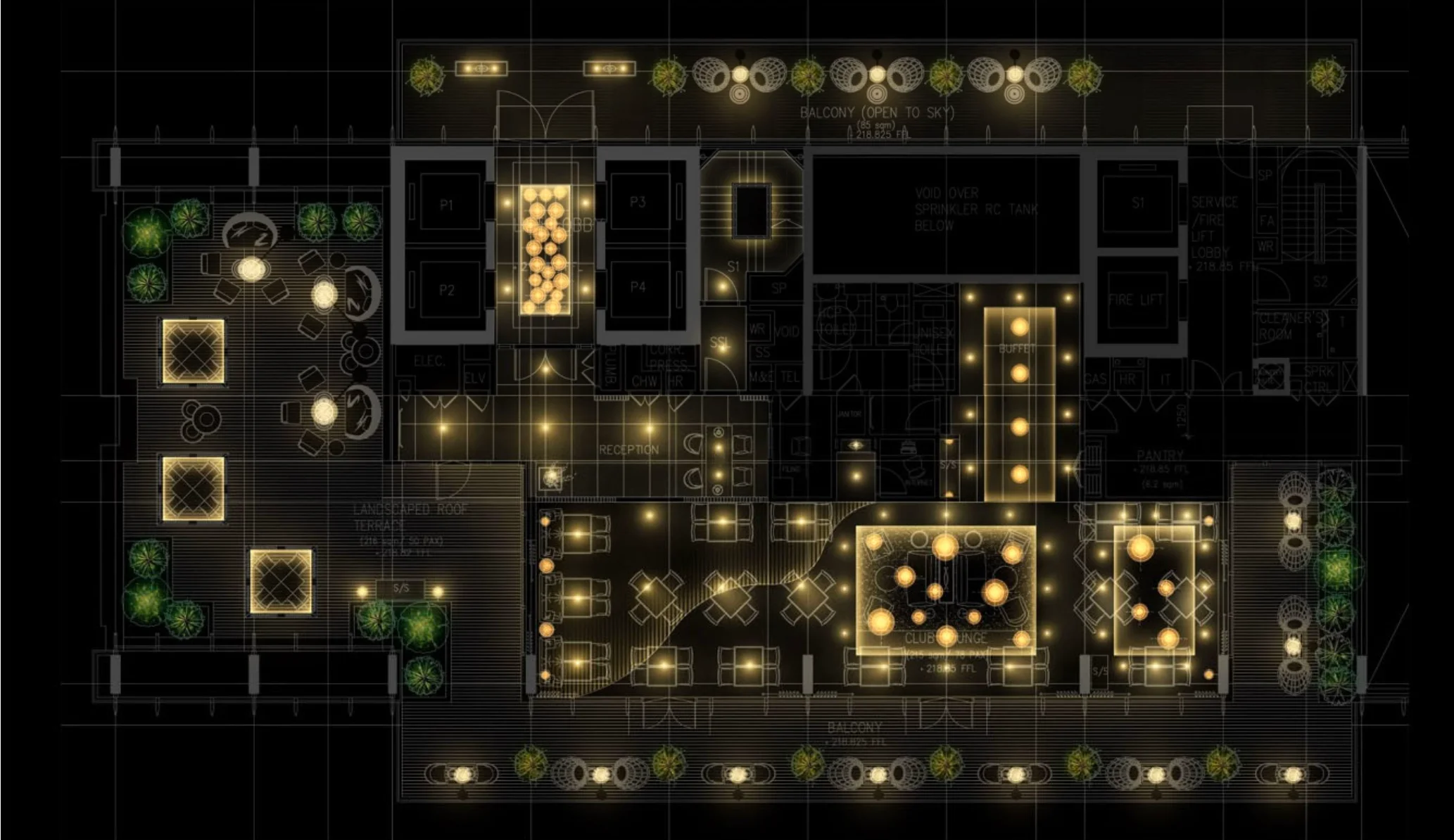
Lighting Design
Lighting design is the wedge of our practice — the part that anchors the rest. A good plan determines beam angles, lumen levels, color temperature, dimming behavior, and the geometry of every fixture before a single wire is pulled. A great plan also determines how the room feels at six in the morning, at six in the evening, and at midnight.
What Lighting Design Covers
- Whole-home design intent written into the project narrative
- Reflected ceiling plans drawn to architectural sheet standards
- Lumen calculations per room and per task
- Beam-angle and aiming decisions for accent and wall-wash work
- Color temperature tuned against finishes, fabrics, and art
- Control-zone diagrams and keypad layouts
- Fixture specification matched to the dimming and control system
- CAD coordination with the architect, interior designer, and electrical engineer
- Final aiming and scene tuning on site once the house is finished
When to Engage
Schematic or early design-development is ideal. That is when conduit, blocking, soffit depths, and fixture geometry can still be adjusted at no cost. We are comfortable engaging later when the project warrants it, but the earlier we are in the room, the more value we add.
The Design-to-Specification Bridge
Lighting design and fixture specification are inseparable in our practice. A design that does not control the fixture schedule is hard to execute; a fixture schedule without a design is just a catalog. We do both — and we credit the design fee toward the fixture and control package on full-scope engagements, so the design phase pays for itself when the system is built.
Deliverables
A typical engagement produces a design intent narrative, an RCP set, a fixture schedule with cut sheets, a control one-line, a keypad layout with engraving, and a final aiming report. All formatted to fit inside the architectural and interior-design package rather than alongside it.